A question we receive from time to time is:
"Can you make the logo larger on the XL, 2XL, and 3XL shirts?"
The short answer is: Yes, it's possible. However, there are production and cost considerations that most people don't realize.
How Screen Printing Normally Works
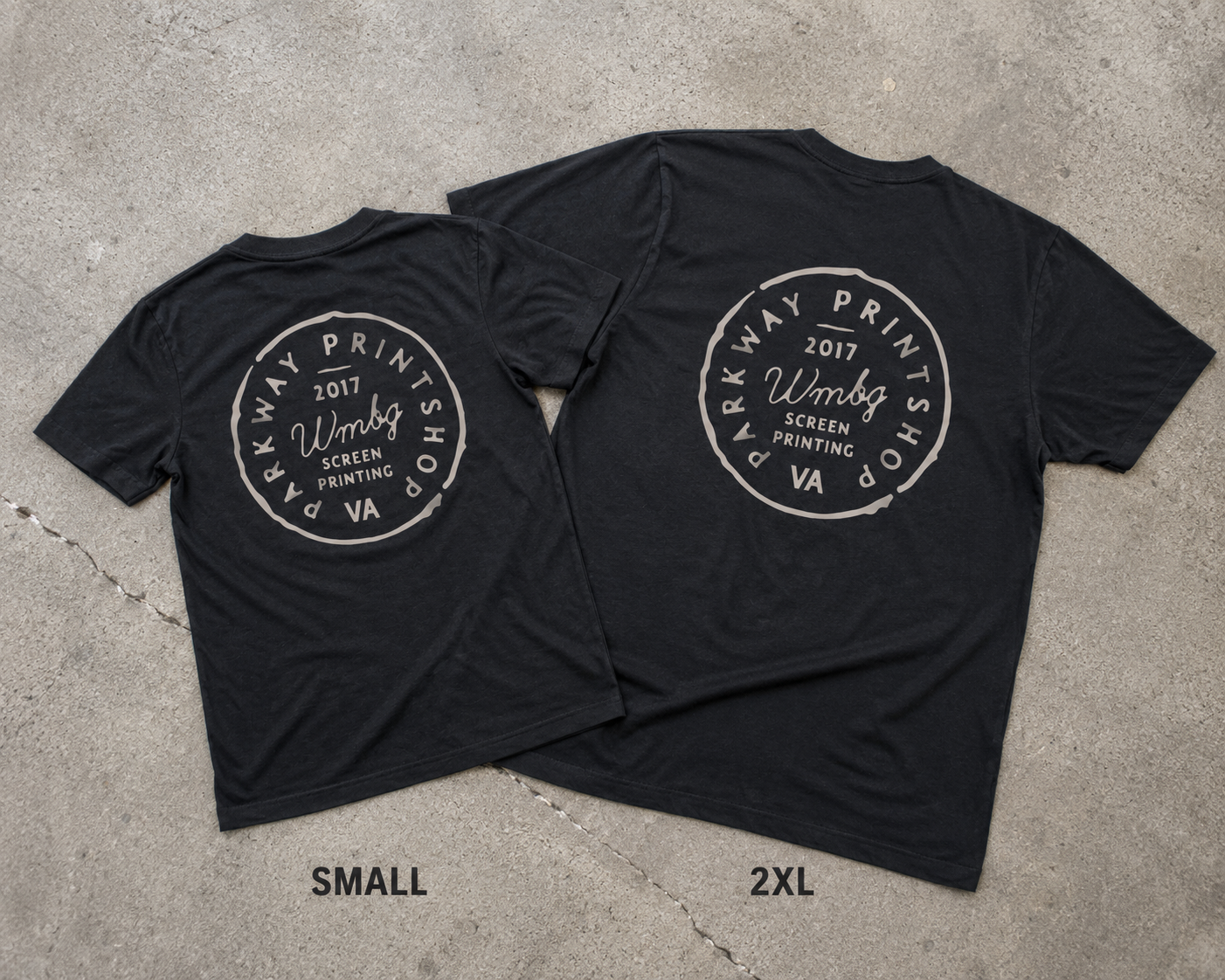
In a standard screen printing order, we create one set of screens and use the same artwork size across the entire run. Whether the shirt is a Small or a 2XL, the logo is printed using the same screens and dimensions.
This approach keeps production efficient, ensures consistency across the order, and helps keep costs down.
Why Don't We Scale the Imprint for Larger Sizes?
While a logo may appear slightly smaller on a larger shirt, increasing the artwork size for certain garment sizes is not as simple as pressing a button.
To print a larger logo on selected sizes, we must:
Create a separate version of the artwork
Create additional screens
Set up the press for the second print size
Track which shirts receive which logo size during production
At that point, the order is essentially being treated as two separate print runs.
For example:
40 shirts with a standard-size logo
20 shirts with an enlarged logo
Even though it's one order, it now requires additional setup and production time. And we all know the saying, “time = money.”
How This Affects Pricing
In screen printing, setup costs are spread across the total quantity ordered.
When an order is divided into multiple print sizes, the quantity for each version becomes smaller. Smaller quantities mean the setup cost is spread across fewer shirts, which increases the cost per piece.
As an example:
A 60-piece order printed with one logo size benefits from the setup cost being spread across all 60 shirts.
If that same order is split into:
40 shirts with a standard logo
20 shirts with an enlarged logo
The production team is effectively managing two separate jobs. Additional setup time is required, and each group of shirts is priced based on its own quantity.
Is It Ever Worth Doing?
For some brands, absolutely. Especially for an order with very high volume.
Large retail programs and national apparel brands often use graded artwork sizes because maintaining visual proportions across all garment sizes is a priority.
For most custom apparel orders, however, the difference is relatively minor, and the additional cost usually outweighs the benefit.
How We Choose the Print Size
When preparing an order, our team doesn't simply pick an arbitrary print size. We evaluate the garment style, print location, and the range of sizes included in the order to determine the logo size that will look the most balanced across the entire run.
Our goal is to create a print that feels intentional and proportional, whether it's being worn on a Small, Medium, Large, or 2XL shirt. While the design may appear slightly larger on smaller garments and slightly smaller on larger garments, the selected size is carefully chosen to provide the best overall appearance for the group as a whole.
In other words, we're optimizing for the entire order, not just one specific shirt size. This approach creates a more consistent look, keeps production efficient, and helps maintain the most cost-effective pricing for our customers.
Our Recommendation
For the vast majority of custom apparel projects, we recommend using a single logo size across the entire order. This keeps costs lower, production smoother, and the final product consistent.
If graded artwork sizes are important for your project, we're happy to discuss it. Just keep in mind that additional setup and production costs will apply because the order must be separated into multiple print runs.
Have questions about your next apparel order? Reach out! We'll help you determine the best approach for your design, budget, and timeline.